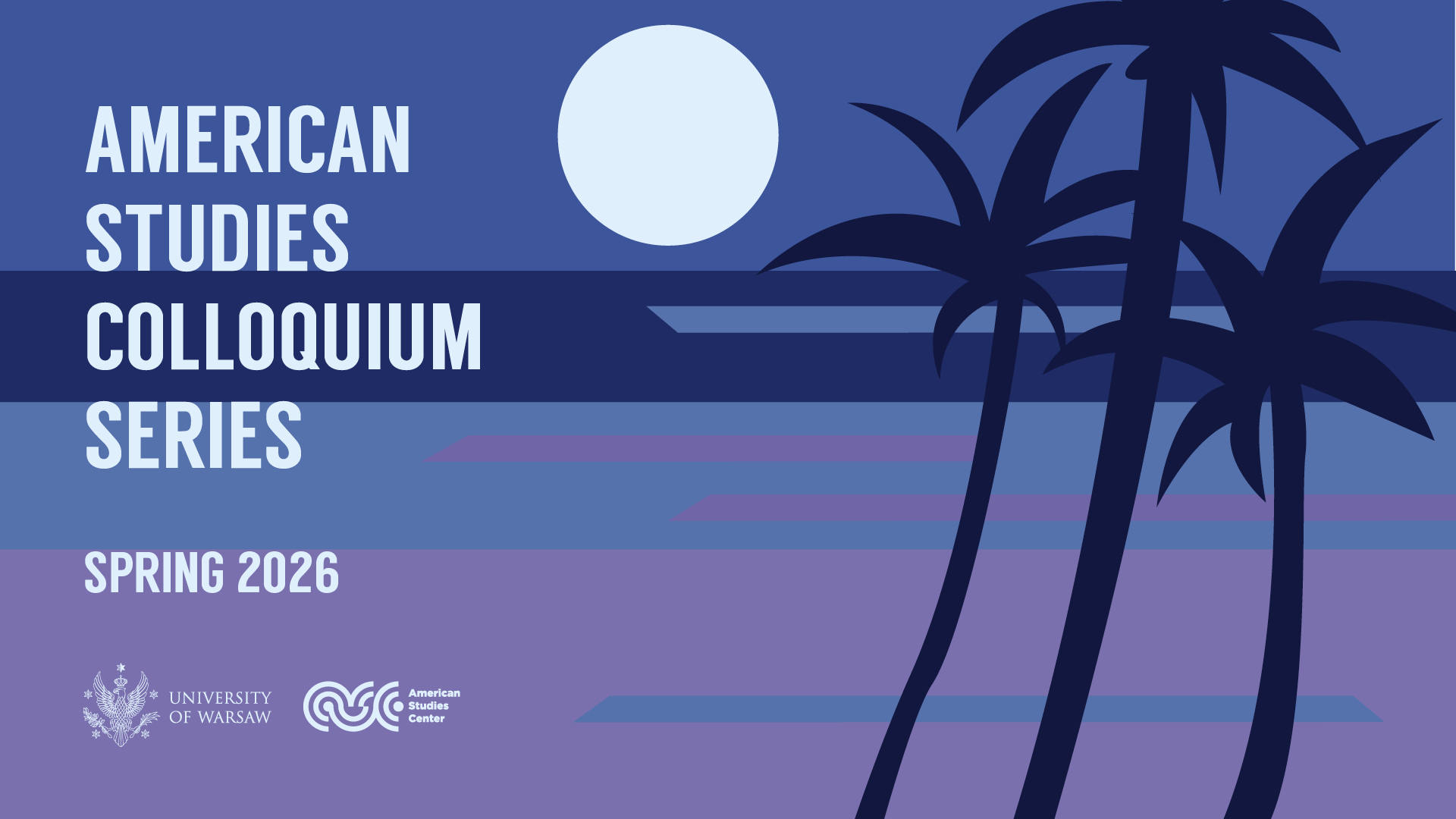

We are pleased to invite you to the last lecture of the American Studies Colloquium Series in the 2025/26 Fall semester!

Kateřina Kolářová
(Charles University in Prague)

“Yearning for Crip Horizons: Crip Theory for Postsocialist Spaces”

Thursday, January 22, 2026
at 4:45 p.m.

You can get 3 OZN points for participating in this event.
Where?

Dobra 55, room 2.118
(the building features some mobility accommodations: ramp and lift)

What?

Against the atmosphere of growing despair at the persistent and increasing inequalities, violence, war devastation and divestment, I adapt the queer-of-color theorist José Muñoz’s notion of utopian horizon and—by bringing in critical disability epistemologies—imagine what is im/possible, what expands and what breaks through pragmatic, rational, and linearly curative political horizons. Building off of my book Rehabilitative Postsocialism (2025) that explores political horizons of postsocialist social imaginaries, I offer and explore the concept of crip horizon and its capacity to accommodate voices of the unheard, lives not imagined worthy of living, too twisted, too feeble, too disabled, too addicted, too excessive and self-absorbed, too inadaptable, too infectious. The usage of crip here is not a move away from disability. Rather, I understand and use both terms as conjoined and inseparable—and this does include mutual tensions and conflicts—attempts at imagining the world otherwise. Disability and crip, each in its own way, yet referencing each other, contribute to making world more encompassing to lives often seen as too troublesome, too demanding of resources while contributing too little to society, lives assumed to be lived in a perpetual (economic, moral, and symbolic) “debt to society.” Crip horizon—opens space for “political orientations, affiliations, and solidarities still emerging” (Chen et al. 3), ones that are built across forms of (ableist, sexist, racialised, classed) marginalization and abandonment. I explore the political and conceptual strength of crip horizon, forms of coalitions and bonds that gesture towards it, and how crip horizons carry resistance, desire and joy in worlds that feel too hard for living.

Who?
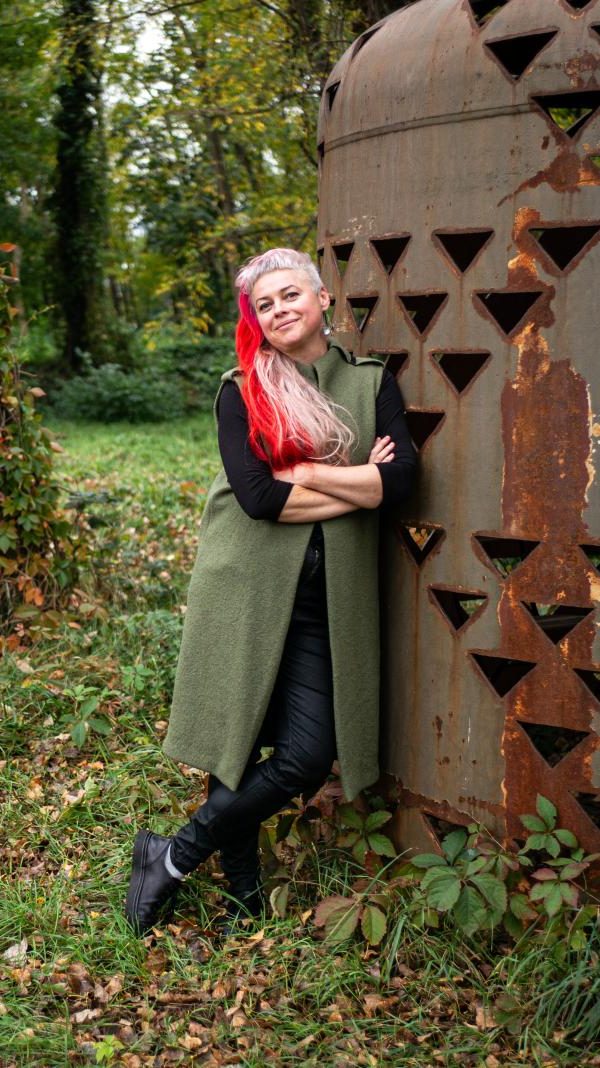
Kateřina Kolářová is an Associate Professor at the Gender Studies Programme, Faculty of Humanities, Charles University in Prague. Her new monograph Rehabilitative Postsocialism:  Disability, Sex, and Race  (Michigan University Press, 2025) presents intersectional postsocialism as an analytic that can and should be brought to bear to understand cultural politics, economic formations, and state politics through the present day. Her work focuses on intersections of disability, sexuality and race, (feminist queer crip) transnationalisms and postsocialisms.  Recently, she has been exploring the bio-social dimensions of metabolism, relationship between human and non human lives, ecological dimensions of digestion and how we coexist with microorganisms, toxic chemicals, and other “unclean” elements/entities.
Also, she is currently wrapping up a long-term research project into HIV/AIDS and politics of collective immunity/susceptibility to viral threats in Czech Republic. She regularly collaborates with artists, galleries and engages in other community-based projects. She is the editor (with Martina Winkler, Uni Kiel) of Re/imaginations of Disability in State Socialism: Visions, Promises, Frustrations (Campus Verlag/Chicago University Press, 2021) and of Otherness-Disability-Criticism: Social Constructions of Disability and Disability (Postižení-Jinakost-Kritika, 2012).

News

Office hours

January 30, 2026

Dear Students, Next week I am going to hold my office hours on Tuesday, 03 February 2026: 10:00-11:30 in the office and 15:45-16:45 online. On Thursday, 05 February 2026: I will be available online 17:30-18:30. In the following week of winter holidays (09 February 2026 – 13 February 2026) there will be no office hours. I will resume my office hours on 17 February 2026.

Year 2025/2026

29 stycznia: Broń jądrowa – zagrożenie czy gwarancja pokoju? Klub Amerykański #5: Paweł Frelik i Jan Smoleński

January 26, 2026

Wielu z nas wydawało się, że po zakończeniu zimnej wojny temat bomby atomowej i nuklearnego wyścigu zbrojeń zszedł na dalszy plan. W USA zaprzestano prób jądrowych, a międzynarodowe traktaty spowodowały, że w amerykańskich laboratoriach nie tworzono już nowych rodzajów tej broni.

News

 Erasmus+ 2026/27 Recruitment Is Open

January 26, 2026

From Ankara to Venice, ASC has Erasmus+ agreements with universities across many European cities. The adventure starts now!

Year 2025/2026

Jan 26: “Laboring in America: Polish-American Women and Labor Migration (1890s-1930s)”

January 21, 2026

The European Forum on US History, in cooperation with the ASC and as a part of the celebration of the ASC’s 50th Anniversary, is hosting an online lecture “Laboring in America: Polish-American Women and Labor Migration (1890s-1930s)” by Sylwia Kuźma-Markowska. 

Year 2025/2026

Jan 22: “‘Do I look famished?’: Weird Orality and Convivial Dying in Ishirō Honda’s Matango (1963).”

January 15, 2026

We’re cordially inviting you to the last open event in the “Wiedze u-korzenione” series in the fall semester 2025/26, co-organized by the Weird Fictions Research Group and Centrum Humanistyki Środowiskowej UW.