
We are pleased to invite you to the first lecture of the American Studies Colloquium Series in the 2025 Fall semester!
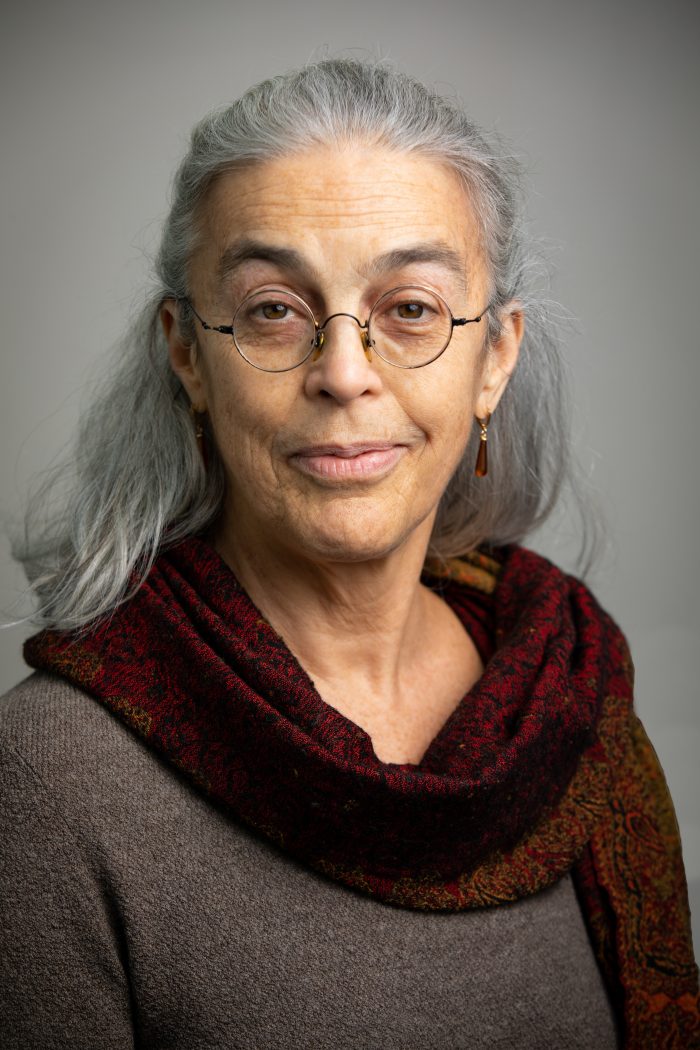
Cristanne Miller
(University at Buffalo)
Emily Dickinson Mediated: How Archives and Editions ‘Slant’ Presentation of their Authors
Thursday, October 30, 2025
at 4:45 p.m.
You can get 3 OZN points for participating in this event.
Where?
Dobra 55, room 2.118
(the building features some mobility accommodations: ramp and lift)
What?
Every archive has its own culture and the records in an archive are (as Eric Ketelaar writes) “dynamic objects in motion, continually shifting with each new use and contextualization.” While an archive is always more than the institution where it is housed, that physical structure and other gate-keeping features of a place, can have an impact on perception. Similarly, every edition mediates our access to a poem. With Dickinson, especially, there is active debate about what constitutes “the poem,” what Dickinson intended through her methods of composition, preservation, and circulation. Both archives and print editions can “slant” a poem. Digital archives are equally interpretive in their presentation of materials. This talk will focus briefly on archives generally and then analyze three archival libraries and several print and digital editions or archives of poetry, focusing on the work of Emily Dickinson and Marianne Moore. With Dickinson, questions of mediation are of significance because there is scholarly debate about what constitutes a “poem.”
Who?
Cristanne Miller is SUNY Distinguished Professor and Edward H. Butler Professor of English at the University at Buffalo SUNY, emerita. She has published broadly on nineteenth- and twentieth-century poetry. Her books on Dickinson include Emily Dickinson: A Poet’s Grammar (1987), Reading in Time: Emily Dickinson in the Nineteenth Century (2012), the edition Emily Dickinson’s Poems: As She Preserved Them (2016, winner of the MLA Best Scholarly Edition Prize), and The Letters of Emily Dickinson (co-edited with Domhnall Mitchell, 2024). In addition to her extensive publication on modernist poetry, including Cultures of Modernism: Marianne Moore, Mina Loy, Else Lasker-Schüler. Gender and Literary Community in New York and Berlin, Miller is founder and director of the Marianne Moore Digital Archive. Among other awards, she recently received a National Endowment for the Humanities award to support the MMDA (2025-2028).